The World of Dream: Don Quixote and Sancho Panza
Imperial cycles, the mechanics of idealism, and the sunset of historical reality
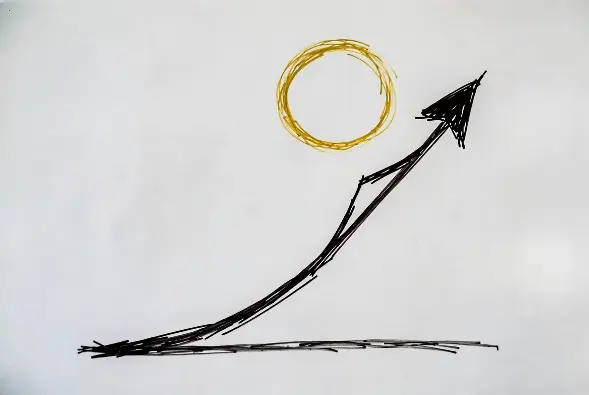
Don Quixote as a Collective Image of Historical Ascent
Let us imagine for a moment and perhaps slightly distort the essence of what is being described...
Don Quixote, the central figure of the novel by Miguel de Cervantes, can be understood as a summation of centuries of growth and formation of the Spanish Empire, just as the poem «If»[i] represents a peak of the British spirit of thought — and then, afterwards, the movement downward.
The Beginning of the Ascent
Don Quixote is a collective image of the Spanish aristocracy of ascent, of the ruling builder class. He is a powerful dreamer, born within the boundaries of a centuries-long struggle connected with resistance to the Moorish invasion.
He is the ideal instrument forged for the Reconquista, crystallized into a high-minded warrior-aristocrat capable of Dreaming, capable of contemplative striving, without which the achievement of something that exists beyond the boundaries of the "world of the defeated" becomes impossible.
And in a certain sense, one may suppose that the Christians living on the Iberian Peninsula had already lost. Victory could be achieved only through intense compression combined with a simultaneous striving toward a significant madness — the kind of madness that makes it possible to transform the "world of the perpetually defeated" into something else. That is, a Dream from another world, and also the Mad Idealist Dreamer — only this can become the foundation of a break with a hopeless situation that insists defeat is inevitable.
As a result of a long and severe historical selection upward, a concentration occurred. This became the foundation for the emergence of a special hidalgo (and beside him, unseen but always present, the barefoot Capuchin, Franciscan, or Dominican monk). This figure, at the beginning of his formation, shattered the Moorish kingdoms. Afterwards he stepped onto the world stage as a builder of a new Catholic planetary order.
Thus, as a result of a great historical ascent driven by Dream and by the hidalgo who emerged for its sake, such a "lover" conquered and created a new world. And within this planetary construction of a great Christian Dream, the Spanish Empire — or any particular historical administration — was merely an instrument, just as the proud Spanish aristocrat standing at its spearhead was merely an instrument.
In the philosophical work «The Life of Don Quixote and Sancho»[ii], Miguel de Unamuno largely summarizes reflection on this historical phenomenon. Unamuno argues that Don Quixote condensed within himself the image of all the conquistadors, most of whom gained little in this world. Perhaps only immortality in the other one, ending their lives in monasteries or dying from wounds and disease.
Reality — or the "windmills" — ultimately proves stronger. The windmills are uselessness itself, blowing out the candle and affirming the endless tragedy of existence.
Cooling and Decline
Beside Don Quixote there is always Sancho, walking alongside him, looking at the Don, yet never fully grasping his madness... But Sancho has been promised a governorship, and so... he continues to follow.
In the course of the creation and conquest of a great world, and in the cooling that inevitably follows, something peculiar happens. The place once occupied by the true hidalgo — for whom the life of a respectable burgher, with its endless counting of chickens, is unbearably dull — is gradually taken by Sancho.
Thus, after Don Quixote, the next governor will be Sancho. And this marks the completion of something that was once great, something that slowly transforms into a "barnyard" or a "world without Dream."
Don Quixote finds no place for himself in this new reality. He becomes an unnecessary remnant — a fragment of a creation once built by dreamers and now destroyed. In this new reading, Quixote appears as something inadequate, a kind of mad incongruity within a cooled and settled world.
Sancho is the collective image of the strength of the common people, the image of a sturdy peasant to whom the lofty aspirations of noblemen are entirely irrelevant. Sancho possesses no aristocratic sense of honor; he does not understand all these seemingly unnecessary conversations.
Yet the symbiosis of Sancho and Quixote was an indispensable condition of yesterday's positive development. Neither could survive without the other. Sancho is the back of Spain; Quixote is the spear.
Sancho always looks upon the apparent madness of his former master and marvels at his antics. Yet what he is really witnessing are attempts to break predetermination itself. But when Don Quixote finally breaks through impossibility and tears apart what seemed predetermined, he suddenly abandons everything and departs... to the other world... And Sancho remains behind, governing the island.
And yes, the Don has no desire to fit himself into the "barnyard." He is unwilling to climb upward within the hierarchy of the barnyard. Of course, yesterday, when it was necessary to build the World of Dream and overcome an emerging civilizational defeat, everyone occupied their proper place. But now everything has been reversed. And what comes next?
Under the rule of the governing class of "Sanchos," everything slowly begins to decline. For genuine development requires something entirely different. Creation does not emerge from a quiet and comfortable life. On the contrary, it emerges from outrageous acts, from the breaking of predetermination, from the overcoming of impossibility. Of course, it always requires the support of Sancho, who represents the positive material substance of productive processes.
Thus there come first the ages of ascent and of mad Don Quixotes, followed by the Sanchos who inherit what they have built. Then comes stabilization and quiet prosperity, during which the upper ranks gradually fill with governing Sanchos.
Conclusion
The peasant-wise yet simple-hearted Sancho will, in the course of gradual hollowing-out, eventually be replaced and pushed aside by something entirely different: rogues of every variety.
That is, by those who, as always in the end, prove incapable of providing even minimal support for what still remains of the cooling order.
Thus, quiet decay and meaninglessness are succeeded by powerful negative processes and by the nostalgia of the Generation of '98[iii].
At the same time, the production of something new — of anything genuinely new — requires a connection to "the other side," or to the Dream. And this also presupposes the defense of what was once conquered by the mad Don Quixote, who charges at every threat with a spear in his hand.
The various forms through which the Dream comes to an end are, of course, nothing more than forms of ending. The end of the Dream is still an end.
Conclusions
Both Cervantes and Unamuno, in their own way, summarized a multitude of such Histories, revealing that Don Quixote and the Sancho who comes to replace him are not merely characters. They are a particular Time. Don Quixote aspired to glory, while Sancho aspired to wealth[iv].
There are periods when it seems that Sancho's morality — or even the morality that, through further decline and exhaustion, will eventually replace Sancho himself — is a blessing.
At such moments, one may become convinced that there is no need to strive toward the morality of the Dons, no need to reach toward the Dream, drawing others upward with it, gathering the assembly toward a new world. Instead, one should become something else entirely...
But times change. Places change. And one replaces another.